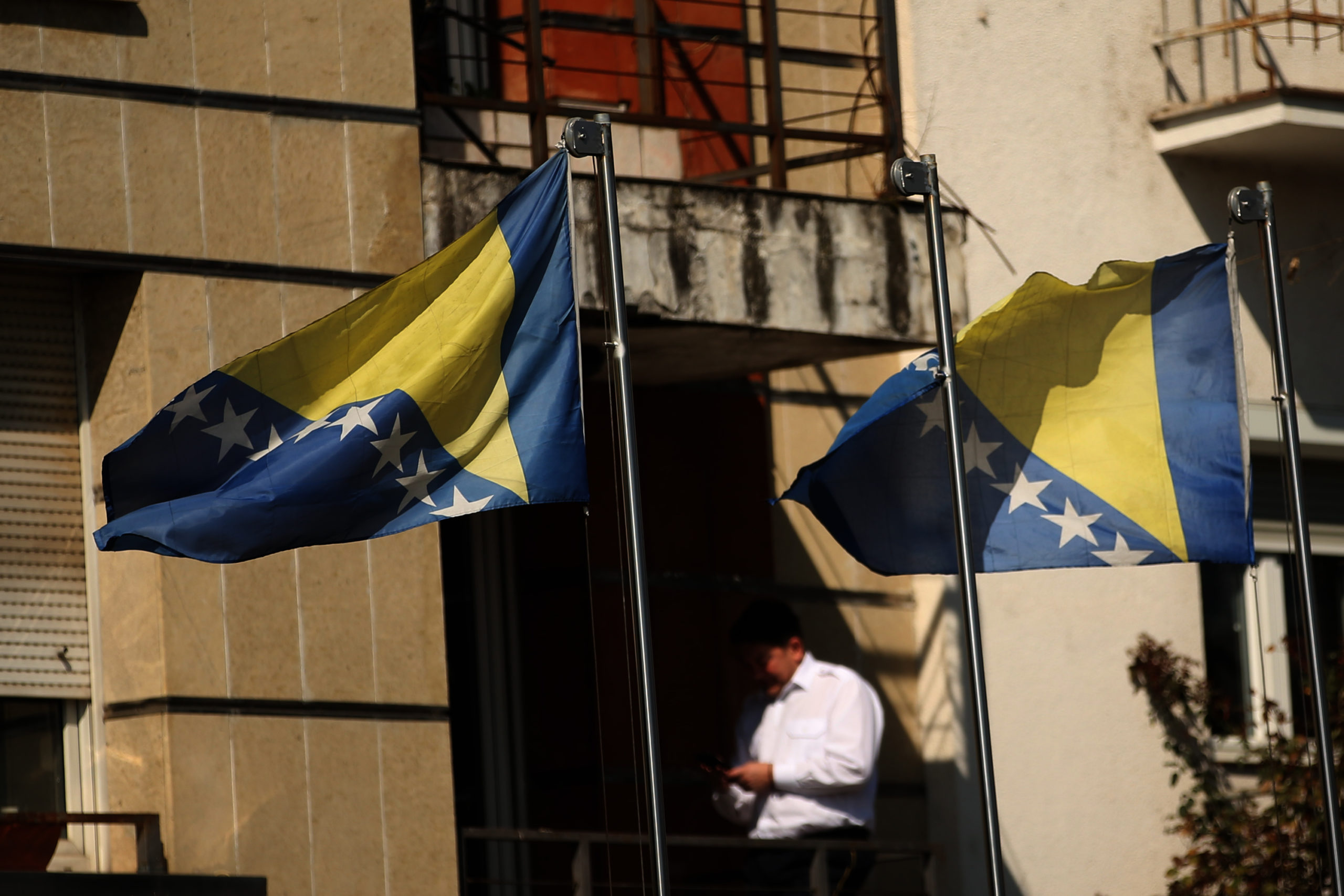
In Finland, access to high-speed internet is a basic human right, Slovenians have a constitutionally guaranteed right to drinking water, French women have a constitutional right to abortion. And what do citizens of BiH have? They have 2 entities and 3 constituent peoples.
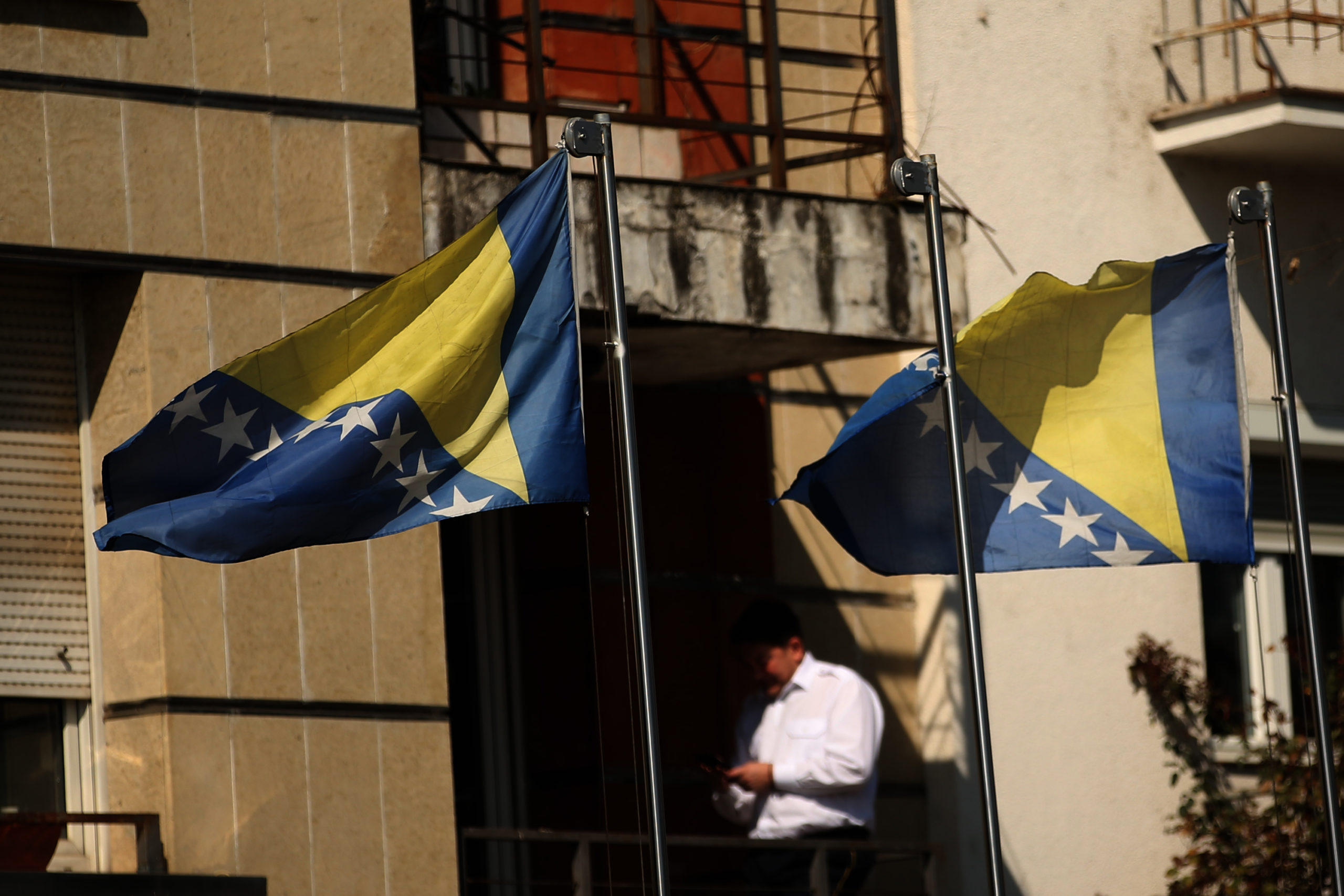
PHOTO: SINIŠA PAŠALIĆ/RINGIER
The Constitution of BiH does not explicitly guarantee even the equality of men and women. The concept of gender is not mentioned at all in the Constitution of BiH, and gender equality is mentioned only in the context of the prohibition of discrimination.
The highest legal act of BiH is written exclusively in the masculine gender. There are 3 members of the Presidency of BiH and no female members. Željka Cvijanović is, therefore, “invisible” in the Constitution of BiH, as is Borjana Krišto, the President of the Council of Ministers of BiH.
Because, in the Constitution of BiH there are no female officials, nor female citizens, nor members of constituent peoples and Others.
Not even some rights that were guaranteed to the citizens of socialist Yugoslavia back in 1974, such as the right that “every person freely decides on the birth of children”, have not been “rewritten” by Bosnia and Herzegovina.
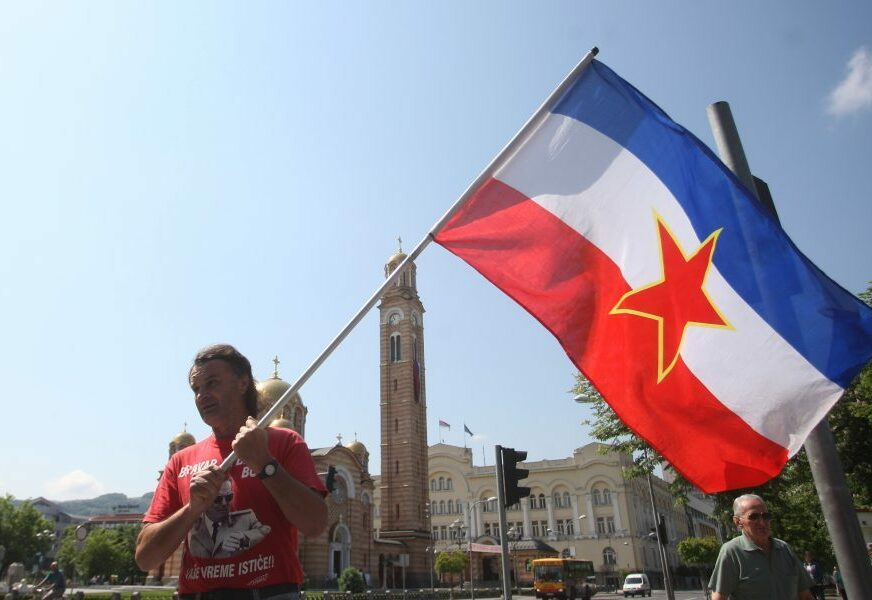
PHOTO: SINIŠA PAŠALIĆ/RAS SRBIJA
The right to abortion in BiH is prescribed by law, but in many parts of BiH, this right is effectively denied to women, because gynecologists, due to “conscientious objections”, refuse to perform this intervention.
If the right to abortion were enshrined in the Constitution, as has been the case in France since last year, the question is what the situation on the ground would be.
Constitutional changes are a hot taboo topic
Many human rights advocates are of the opinion that the Constitution of BiH should be changed, but this is difficult to implement.
Ever since the signing of the Dayton Peace Agreement, of which the Constitution of BiH is an integral part, constitutional changes have been a kind of taboo and have been reduced to a “hot” political, ethno-national topic.
The problem, as many analysts have noted, is that the Constitution of BiH, as defined in 1995, is dominated by collective rights. Accordingly, constitutional reforms have always been the exclusive right of the leading political parties, which represent these collective rights.
In addition, in previous attempts of constitutional changes, representatives of the international community, namely the USA and the European Union, have always been involved.
In such a distribution of forces, discussions on the Constitution have taken place in closed circles, far from the public eye, i.e. from the eyes of the citizens who are most concerned.
When it comes to “unpacking” the Constitution of BiH, the least talked about was the corpus of human rights, although in its 2023 report, the European Commission stated that changes to the Constitution were necessary to bring it into line with the European Convention on Human Rights.
Brussels is only partly right in this assessment. Because the catalogue of human rights, prescribed by the Dayton Constitution of BiH, was literally copied from the European Convention.
The Constitution of BiH proclaims 13 human rights, which are, so to speak, elementary: from the right to life, to freedom of movement and association, to the prohibition of torture and unlawful deprivation of liberty.
Captured in 1995
In addition, the Constitution of BiH stipulates that the rights and freedoms provided for in the European Convention for the Protection of Human Rights in BiH are “directly applicable” and “have priority over all other laws”.
So what is the problem? The problem is in at least two things. First, some rights in the Constitution of BiH are not explicitly stated, but are “implied”, and implimentation in BiH is not exactly a guarantee.
And second, since 1995, when the Constitution of BiH was established in order to stop the war and create some kind of state, which has not been changed to this day, the world has changed. Both the world and European standards.
PHOTO: FACULTY OF LAW EAST SARAJEVO
Goran Marković, a professor of constitutional law at the University of East Sarajevo, believes that the provisions of the Constitution of BiH on human rights reflect the “historical circumstances of its adoption”.
– Both the theory of human rights and individual constitutional systems have meanwhile progressed in terms of recognizing and protecting new human rights, which is not the case with our constitution, which remained “trapped” in 1995 – says Professor Marković for Srpskainfo.
He adds that political conflicts and the unresolved problem of discrimination have a decisive influence on the lack of interest in discussions about recognizing a new generation of human rights.
– The scope and content of individual human rights in BiH often depend on the will of political elites, expressed in legal texts, although this should not be the case – adds Marković.
He points out that, in addition to legal ones, there are also factual problems related to the extremely uneven and unjust distribution of economic and political power in society, which significantly complicates or prevents the exercise of human rights, especially economic and social ones.
Marković believes that BiH should be defined in the Constitution as a social state.
– This would be a programmatic and declarative norm, which in itself would not represent a guarantee that BiH will truly be a social state. However, this programmatic norm could exert a moral and political influence, indicate the will of the constitution-maker to make the state social in the future and direct legislation towards the recognition and implementation of the principles of the social state – concludes Marković.
However, BiH is defined “only” as a democratic state, while, for example, Montenegro is defined as a civil, democratic, ecological and social justice state. Two other neighboring states, Serbia and Croatia, also define social, family and health components in their constitutions.
But that is not the end of the story. The Constitution of the Republic of Srpska guarantees the right to freely decide on having children. In the RS, the right to a healthy environment and the right to health care are also guaranteed, with an explicit provision that this right for children, pregnant women and the elderly is provided from public funds.
Does this mean that citizens of the Federation of BiH do not have to live in a healthy environment, that they cannot freely decide on having children, or have health care provided? That must be so, because the Constitution of the Federation of BiH does not guarantee these rights, and neither does the Constitution of BiH.
Men and women
As Dejan Lučka, director of the Banja Luka Centre for Human Rights, points out, due to the failure to define the aforementioned rights in the Constitution of BiH, mothers in different parts of BiH do not have equal rights during maternity leave in practice. There are also differences in the exercise of the right to health insurance and social protection.
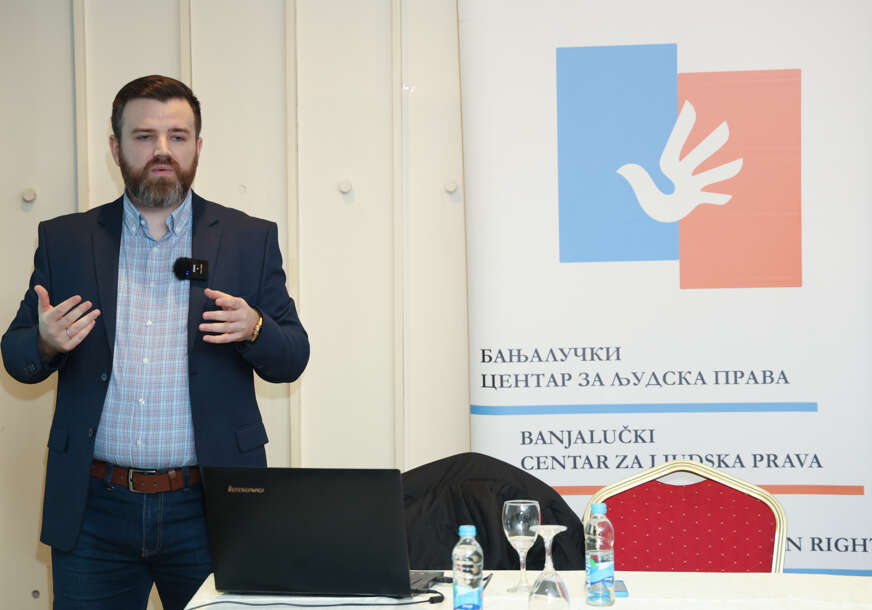
PHOTO: MIOMIR JAKOVLJEVIĆ/RINGIER
– The best solution would be to adopt a new constitution of BiH, but that is not possible, because there is no political consensus. Another solution is to start comprehensively changing the constitutional provisions related to human rights – Lučka tells Srpskainfo.
He points out that even those human rights that the Constitution of BiH declaratively guarantees are only listed, not defined. In addition, Lučka states, it should be kept in mind that the Constitution is the basis for adopting laws, so just referring to international conventions is not the best solution.
Lučka believes that several additional human rights should be included in the Constitution of BiH. He believes that persons with disabilities should be guaranteed special protection and equal inclusion in life by the highest legal act.
– Men and women should have the right to equal remuneration for the same work or work of equal value. The Constitution should also guarantee the right to marry and found a family, so that everyone has the right to marry according to their own choice – says Lučka.
He believes that the Constitution should guarantee that a woman freely decides on having children.
– It should also be guaranteed that mothers and fathers have the same rights and obligations regarding parenthood and that women and men have the right to decide on their reproductive rights and reproductive health, without discrimination, coercion or violence – concludes Lučka.
Dejan Lučka is one of the human rights defenders in BiH, who supports the initiative “Women Citizens for Constitutional Reform. And the “citizens” also advocate for BiH to be defined, not only as a democratic, but also as a social state.
This platform proposes amendments that would ensure gender equality in the language of the Constitution of BiH, and the right of women to equal access to employment and equal pay.
They also advocate for a constitutional guarantee of special protection for pregnant women, mothers and single parents, and for a gender-sensitive social protection policy.
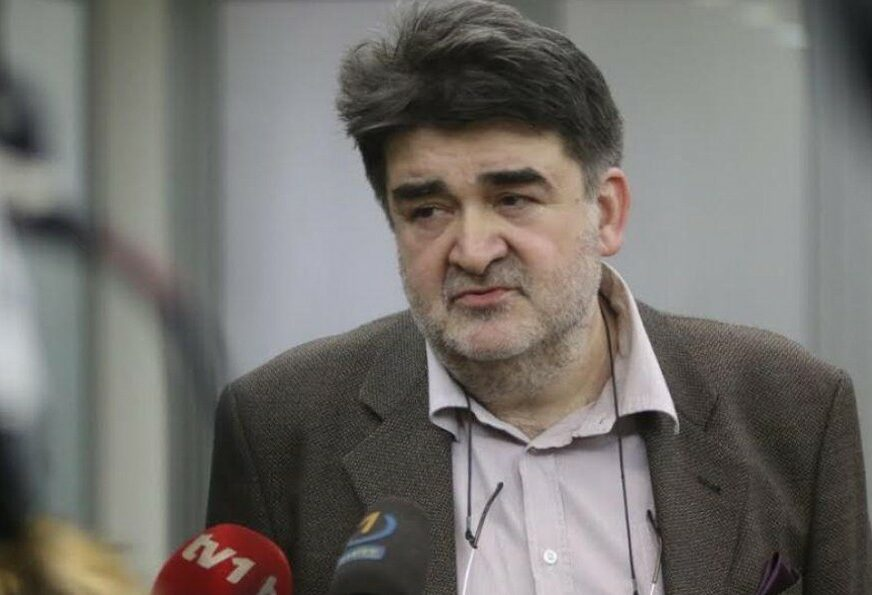
PHOTO: DZENAN-KRIJESTORAC-RADIO-SARAJEVO
Are such goals achievable? Nerzuk Ćurak, a professor at the Faculty of Political Science at the University of Sarajevo, believes that they are, although it is neither an easy nor a simple task.
– In order to succeed in our goal of building a good, just and inclusive society, we need allies in the political sphere who are ready to support the destruction of patriarchy as the ruling social norm and who, as decision-makers, are ready to invest all their energy in building a society of gender equality. Such politicians are few and precisely because they are few, they must become our allies – said Professor Ćurak.
And concluded: societies based on gender equality are, quite simply, better societies.
Written for the Initiative “Women Citizens for Constitutional Reform” by Milkica Milojević.
Text taken from: http://www.srpskainfo.com